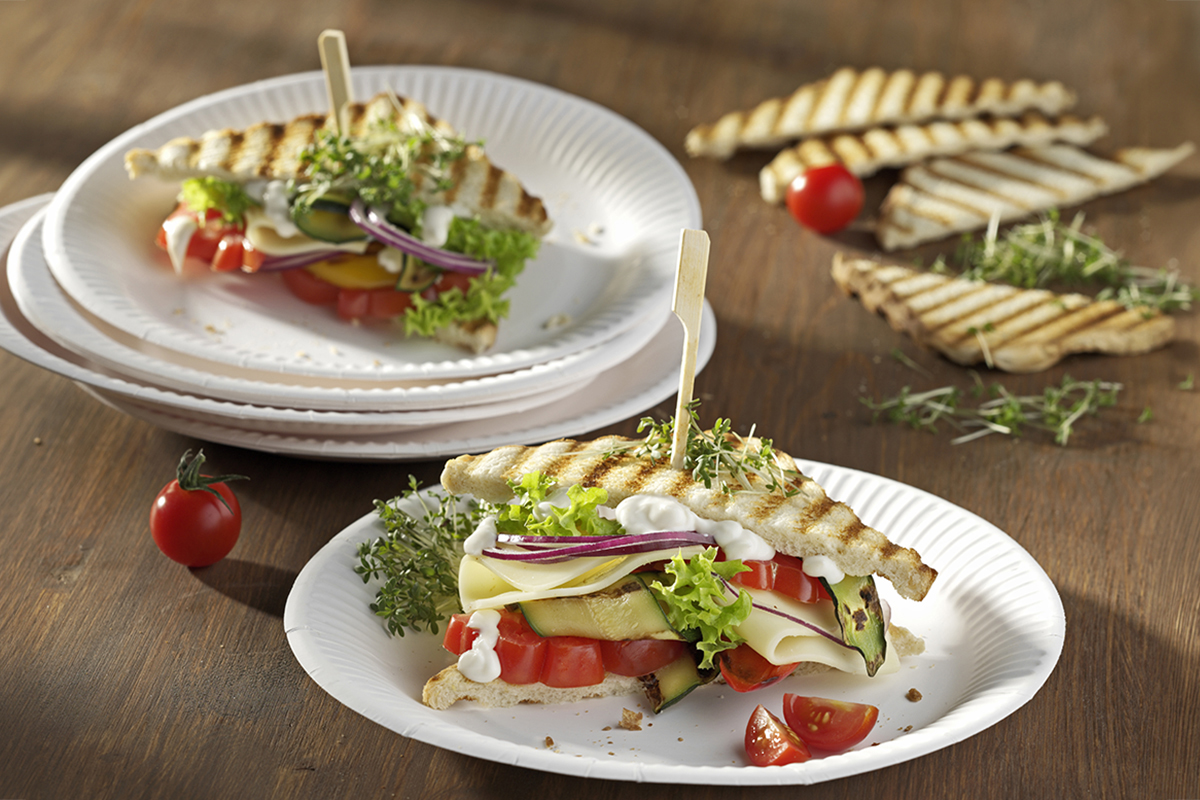
Almost 95 per cent of PAPSTAR products in this product group are made from renewable raw materials such as wood/cardboard, sugar cane, bamboo, palm leaves or corn starch and can be transformed into secondary raw materials after use at events by means of a fibre recovery process.
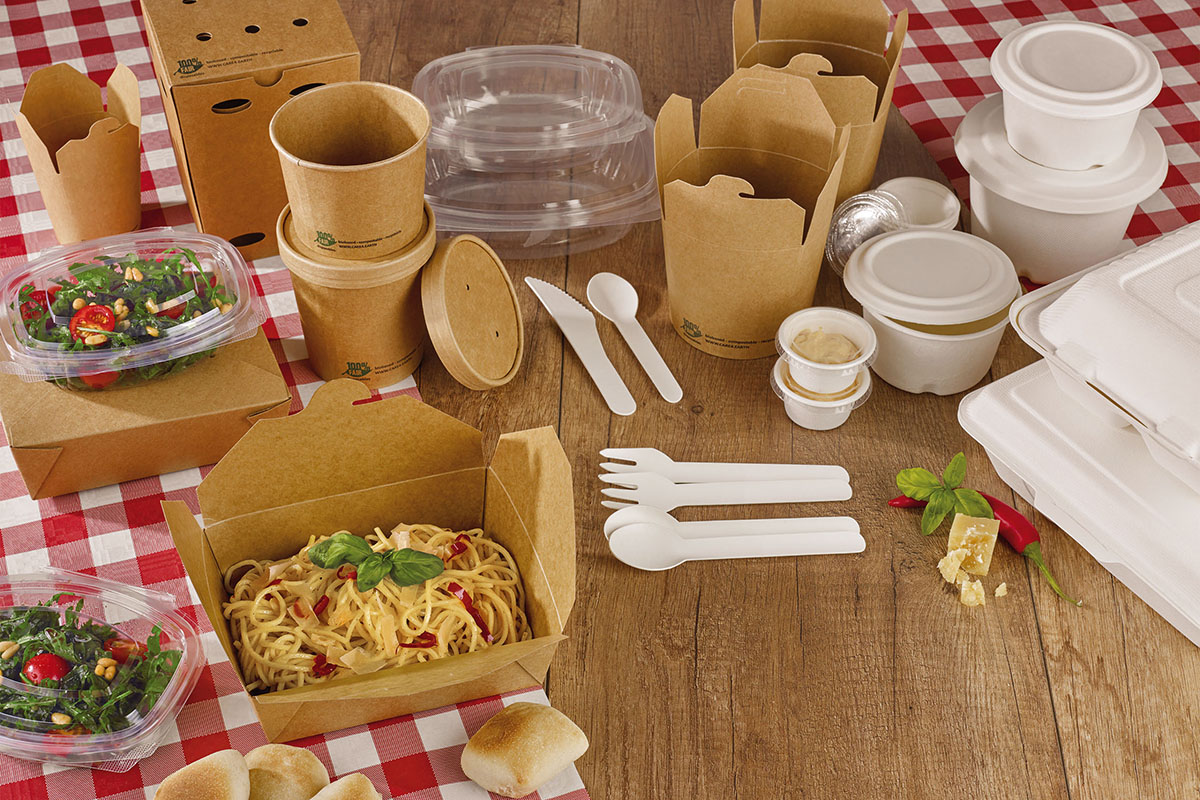
Disposable tableware & packaging
Innovative materials
When designing its product range, PAPSTAR consistently focuses on renewable raw materials and, in the event sector, on solutions in line with the principles of a circular economy.
Hygiene & Safety
Hygiene and safety remain the main arguments for the use of disposable tableware and service packaging. Already 95 percent of all PAPSTAR products in this product group are made from renewable raw materials (wood and fresh fibre cardboard, sugar cane, palm leaves, bamboo, corn or agricultural residues), monomaterials or material mixes.
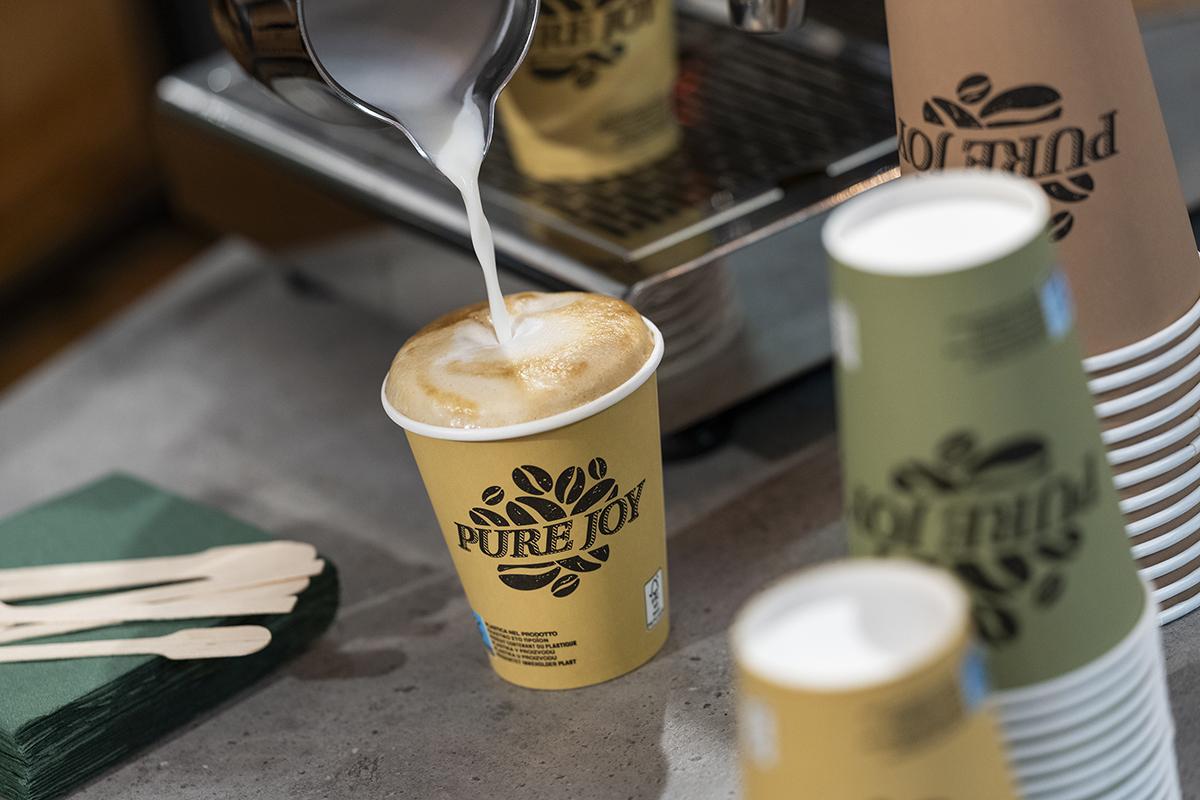
A prime example of a material mix is the cardboard to-go coffee cup with a PLA coating (polylactide, based on corn starch).

Big flap,
lots inside.
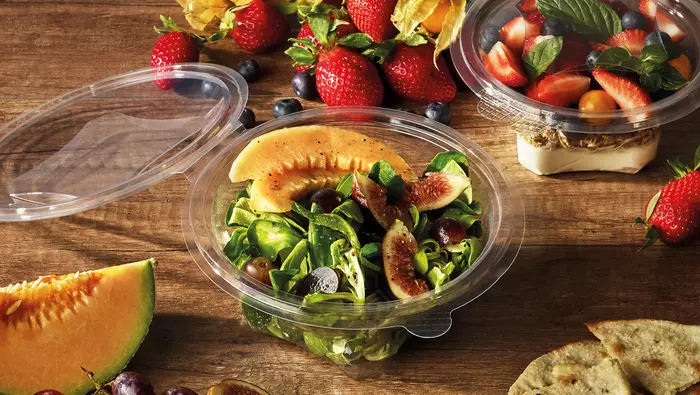
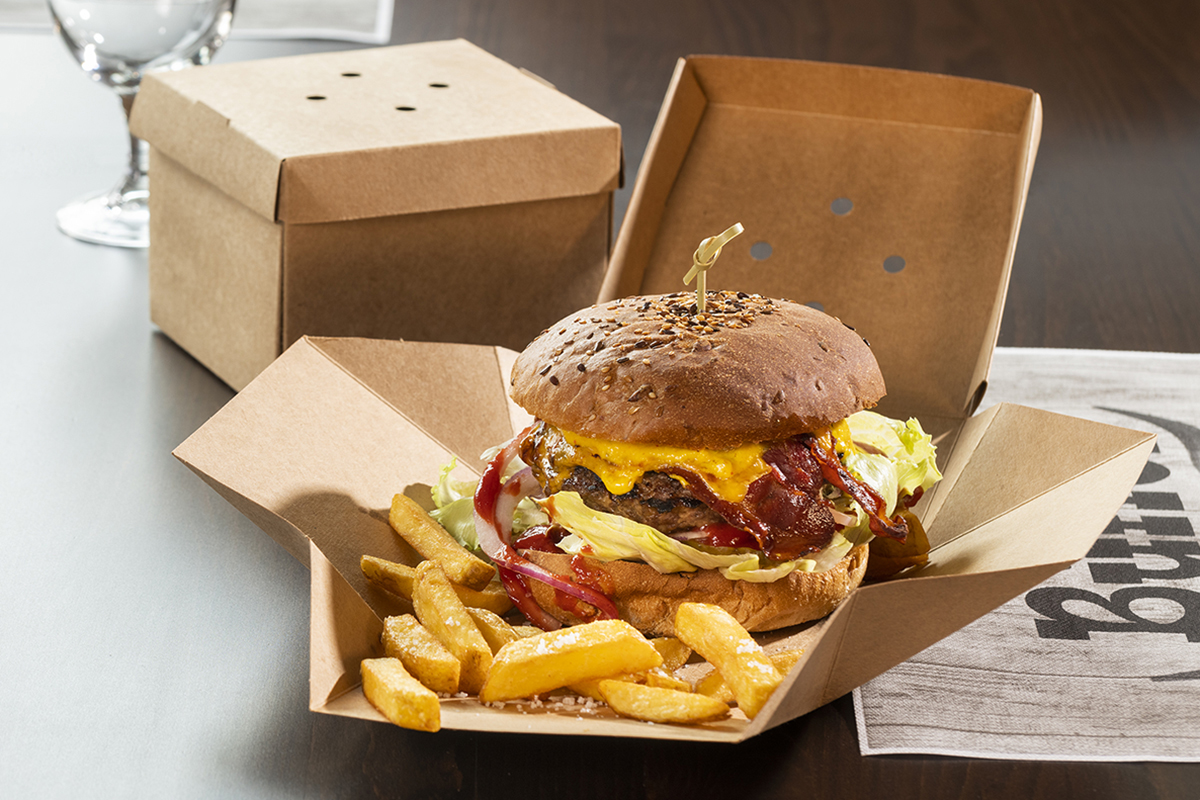
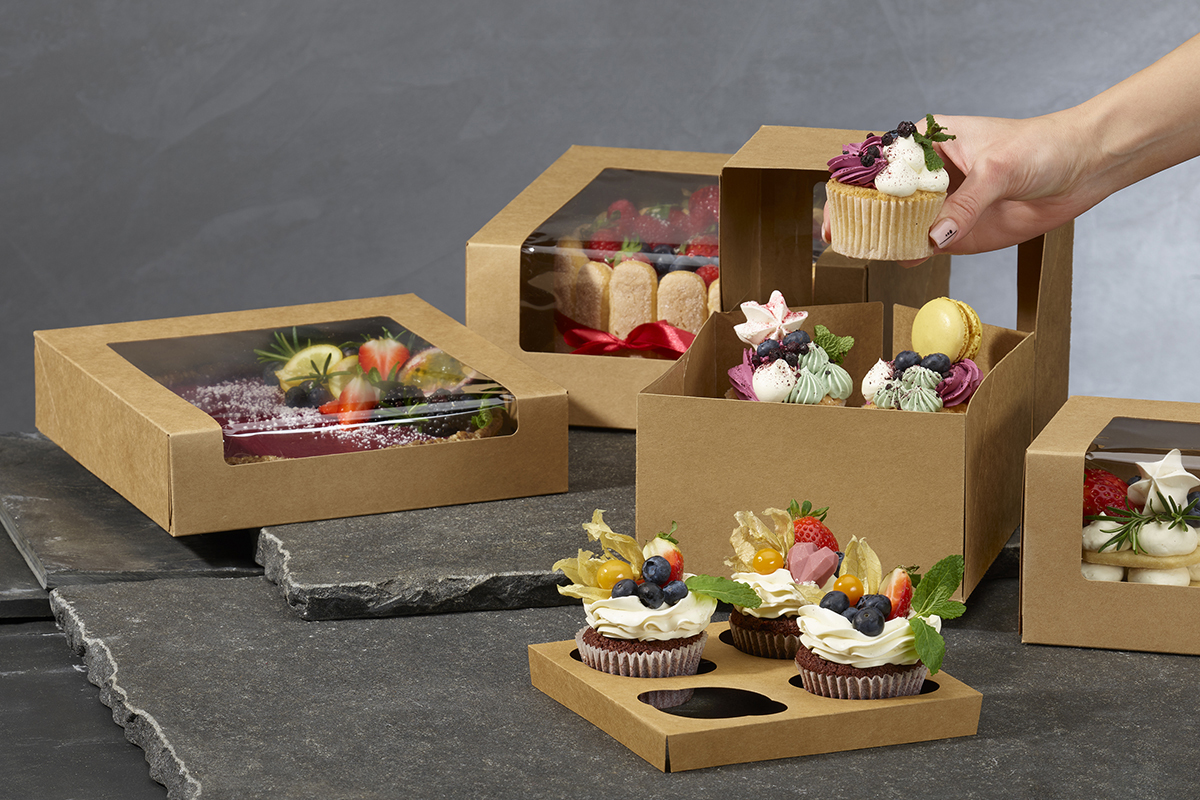
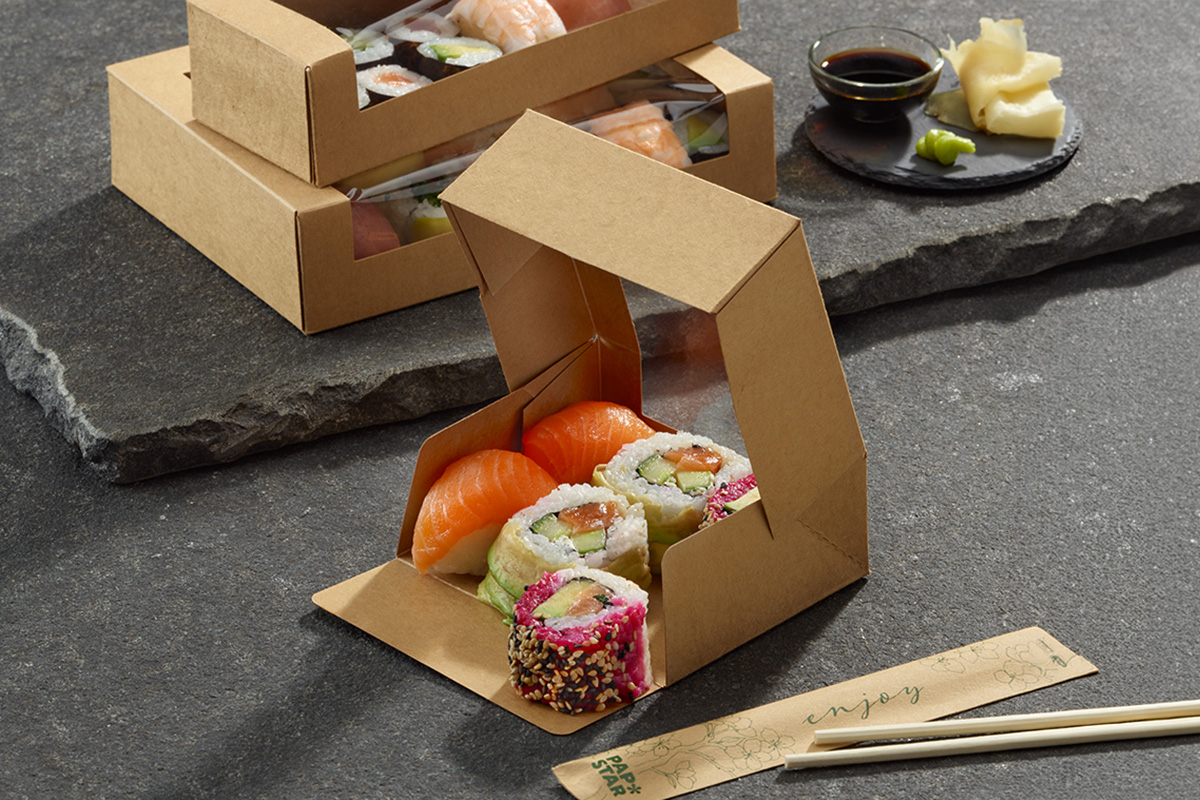
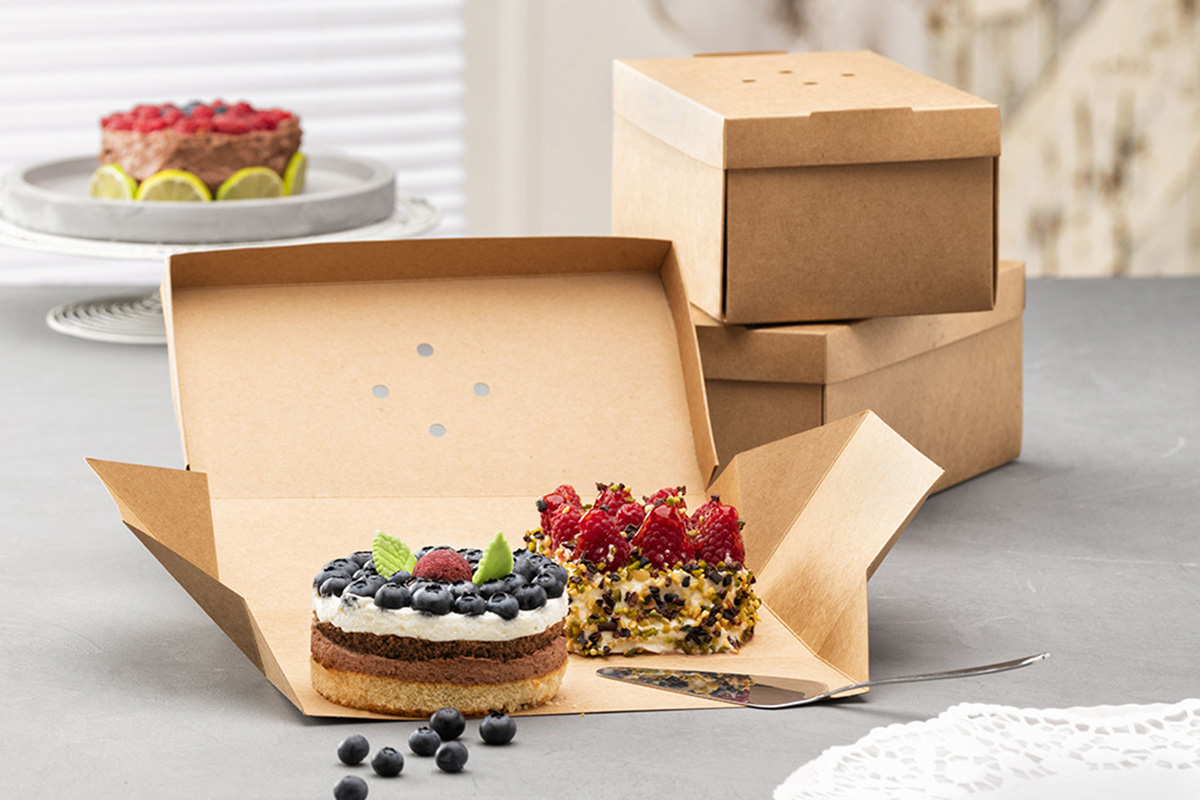
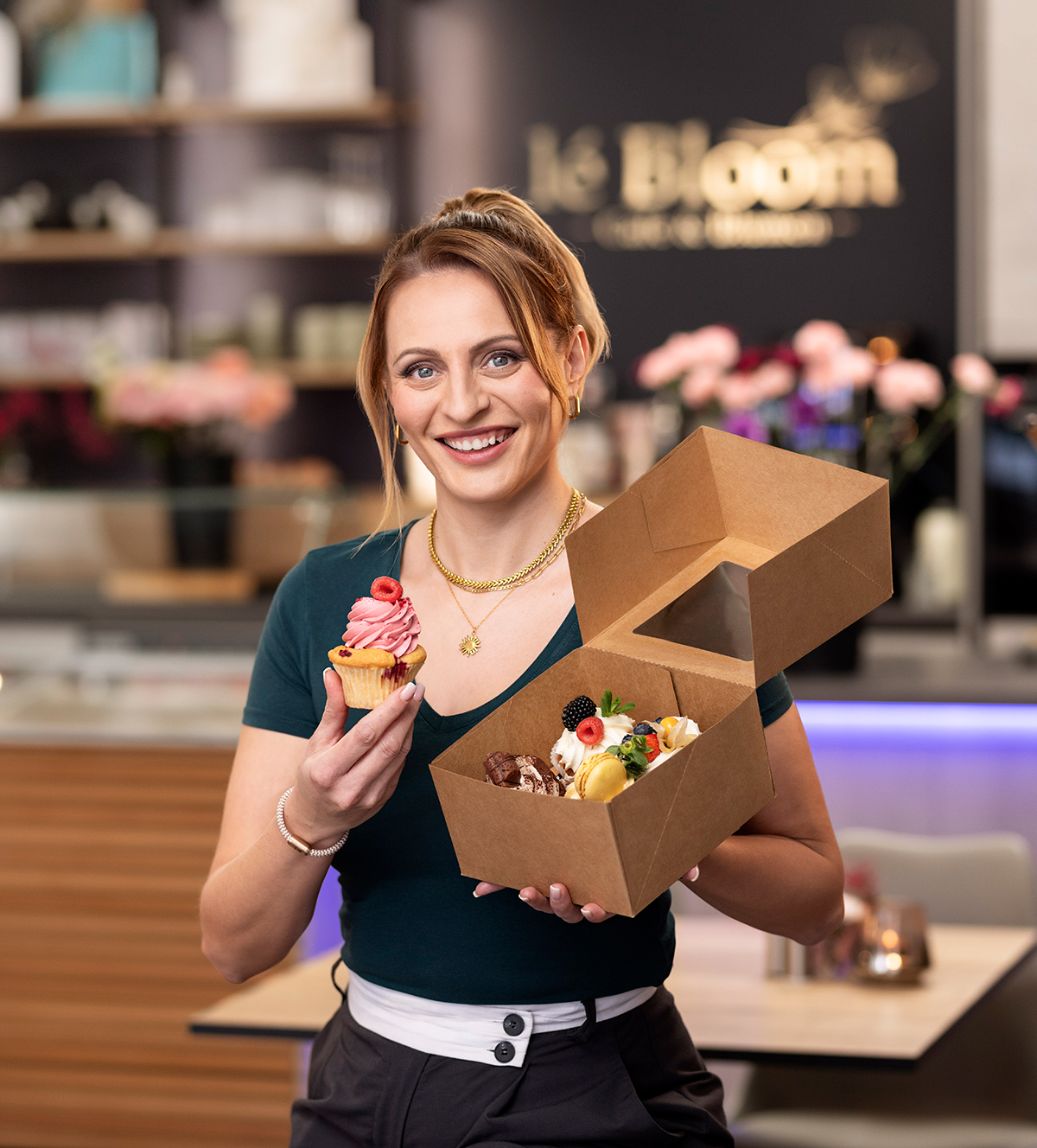
No sooner said than done: thanks to a suggestion for improvement, our cupcake and cake boxes are now also available in a 10-centimetre-high version, so nothing sticks to them. Naturally, they are made of uncoated kraft paper with a cornstarch window.
Elena Derr
Creative restaurateur, art florist and owner of Café lé Bloom
Certified standards
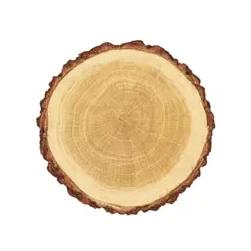
High-quality products made of paperboard and cardboard have always been a hallmark of the PAPSTAR brand. The company’s commitment to the environment and the responsible use of wood as a resource is confirmed by FSC® (Forest Stewardship Council®) certification. By definition, renewable raw materials are agricultural and forestry products that are not used as food or feed, but rather as materials or for the production of heat, electricity, or fuels.
Raw materials
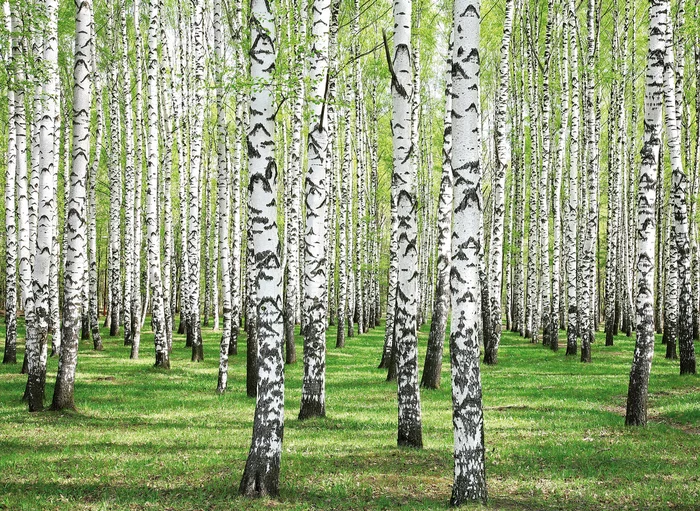
Wood & fresh fibre cardboard
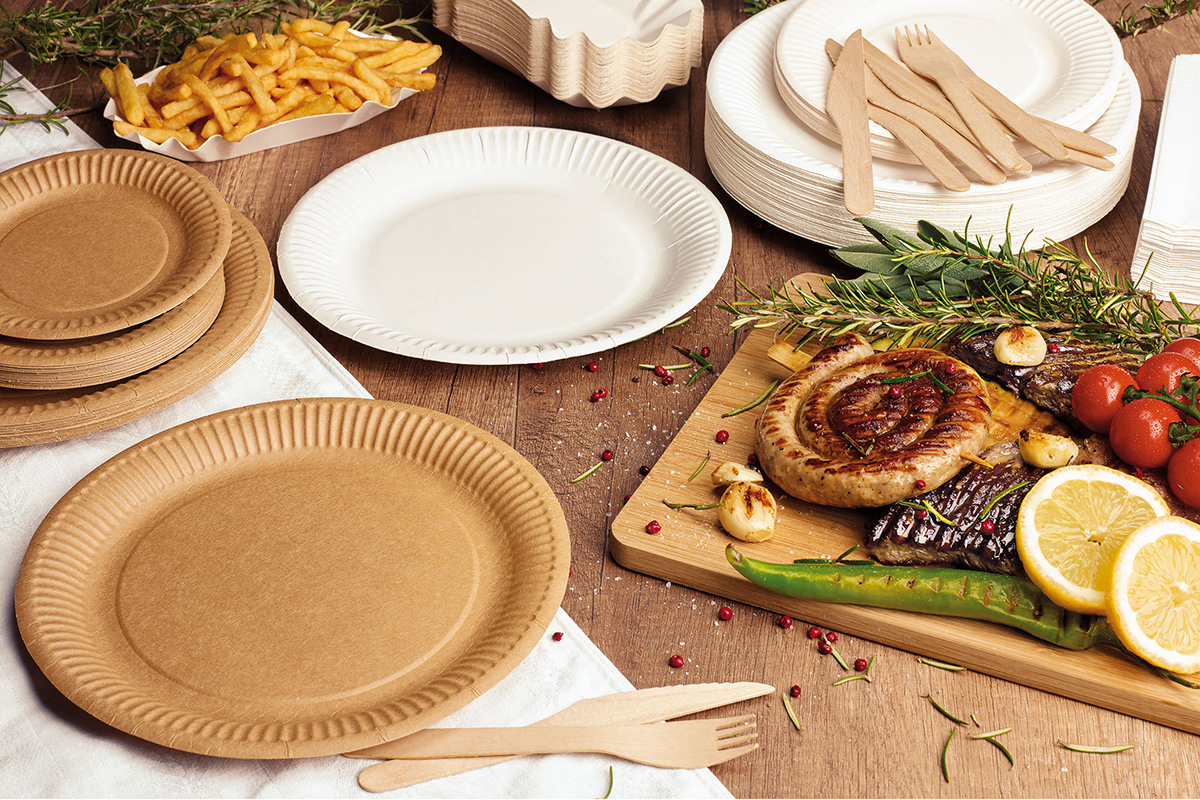
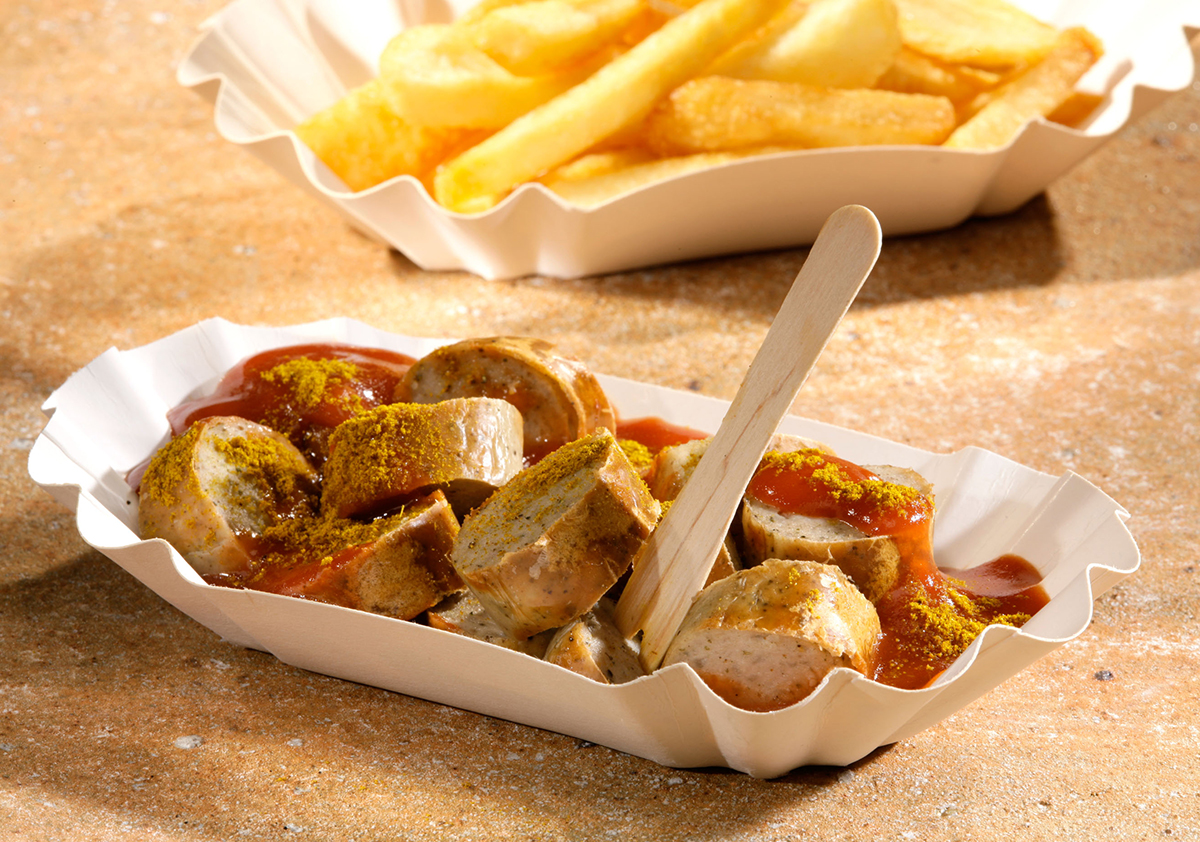
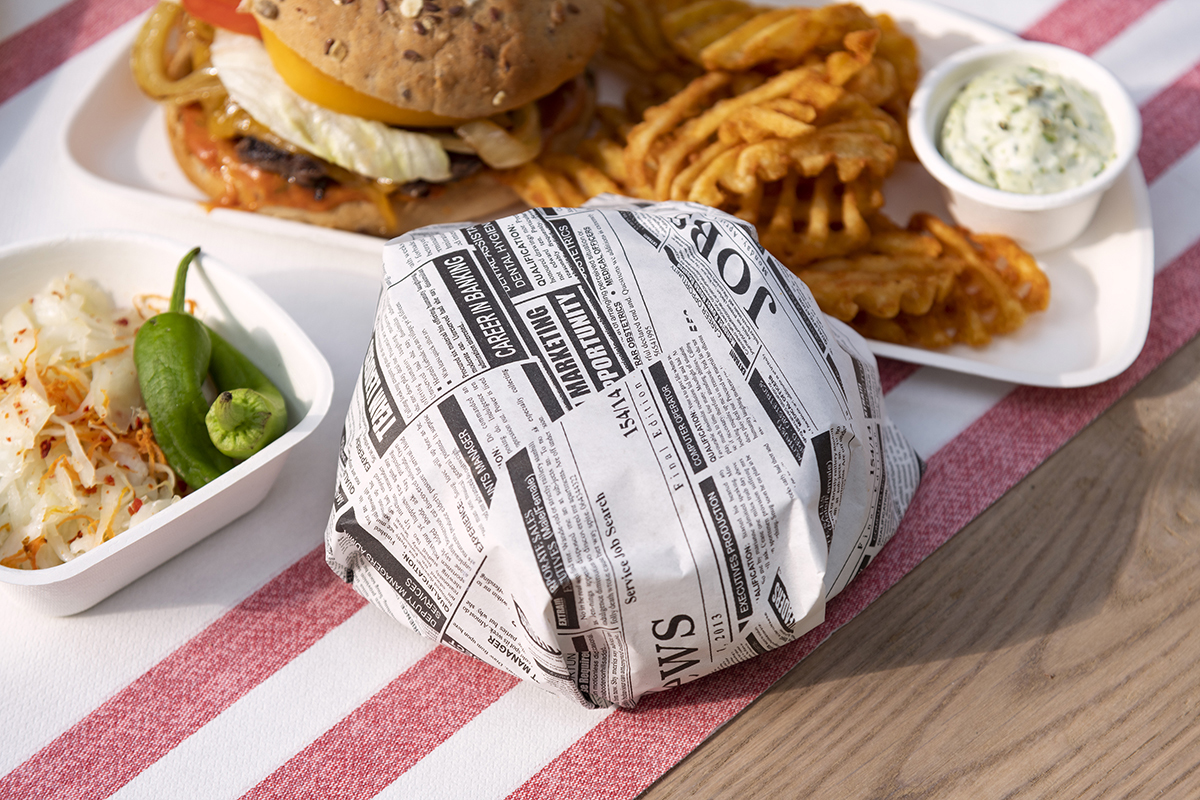
Products made of cardboard, paper or wood are approved for direct contact with dry, moist and fatty foods without restriction. Unlike recycled materials, products made of virgin fibre cardboard are guarantees to be free of any harmful substance that could migrate into food, such as those from waste paper processing (printing ink, etc.). Only wood from sustainable, FSC®-certified forestry is used.
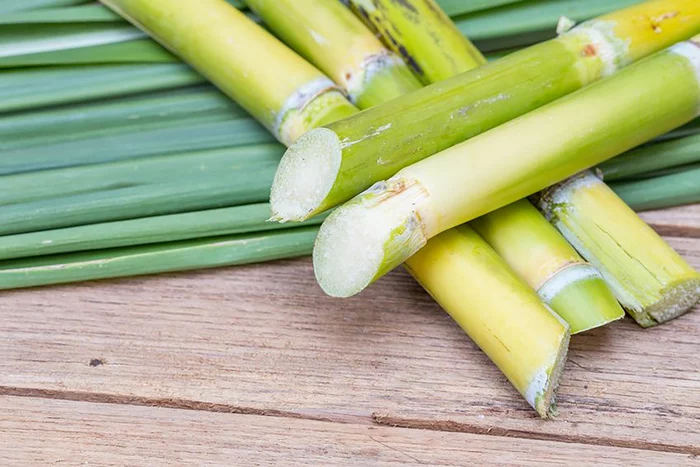
Sugar Cane
Sugar cane is primarily used to produce sugar. The sugar juice is pressed out of the cane. The fibrous part, known as bagasse, remains as a by-product and can be used to make stylish and sturdy plates, bowls or meal boxes. Products made from bagasse are microwave-safe. Sugar cane is a renewable raw material that can be harvested up to three times a year.
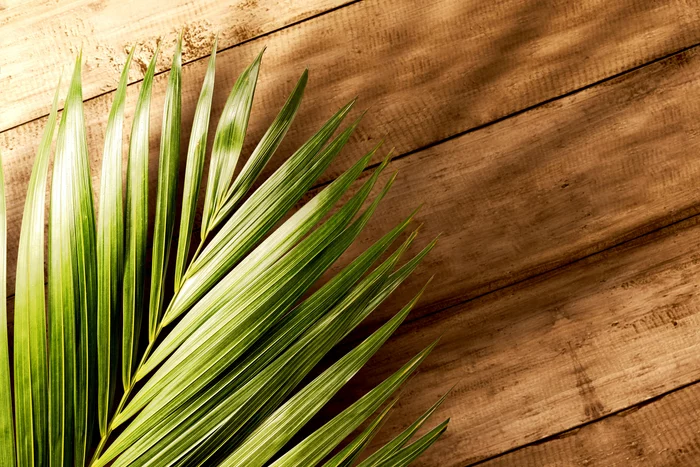
Palm leaf
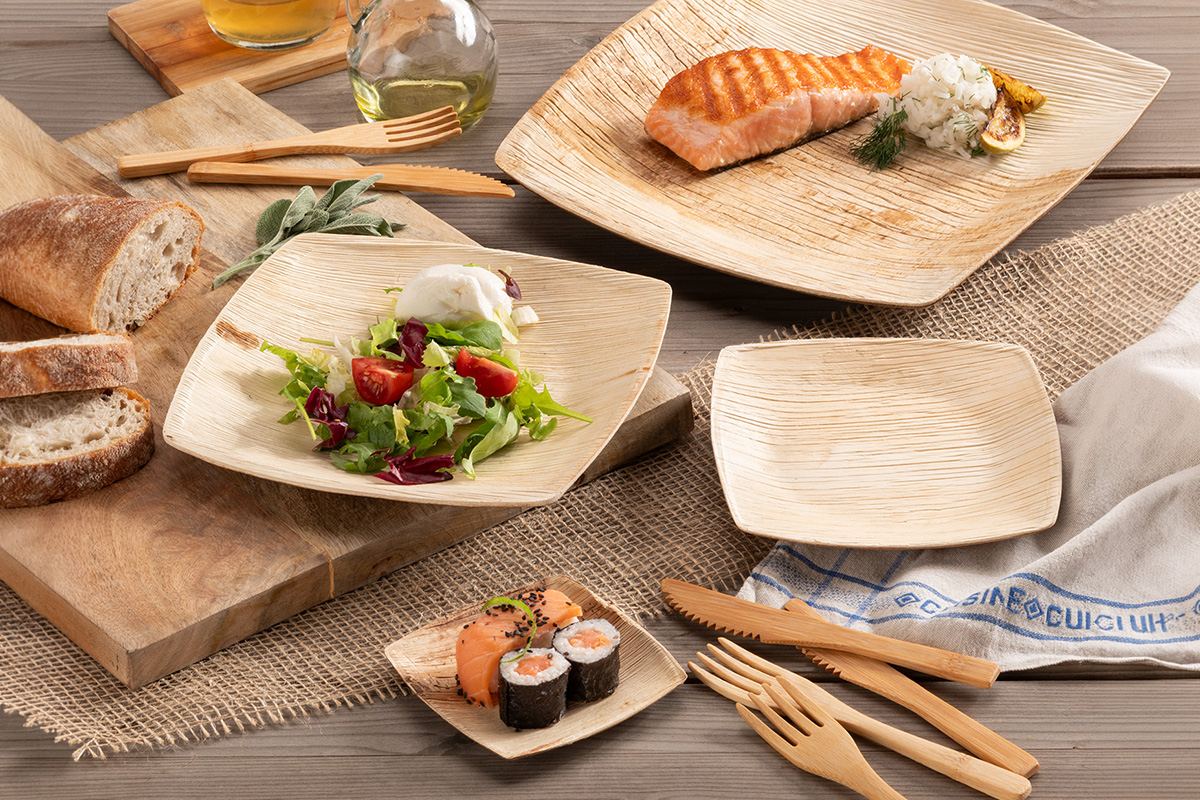
Disposable tableware made from palm leaves is produced from the leaves of the areca palm. The tree bears huge palm fronds with leaves that it sheds naturally every few weeks. These are cleaned and dried in the sun. Heat and a pressing process are then used to create robust plates and bowls that are suitable for use in microwave ovens. The individual surface structure makes each piece truly unique.
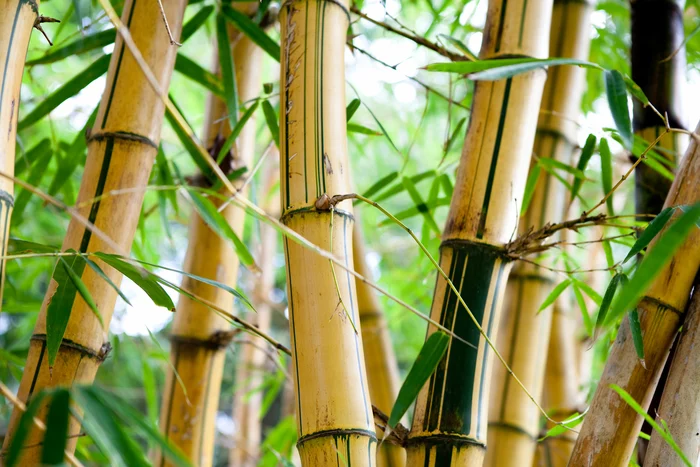
Bamboo
With the exception of Europe and Antarctica, bamboo species are found all over the world. The raw material grows extremely quickly and is neutral in taste. Bamboo is also naturally antibacterial and antimicrobial. Other advantages of bamboo tableware and cutlery include their stability and natural look. The purist manufacturing process (rolled and shaped) does not involve any chemical additives such as melamine resin.
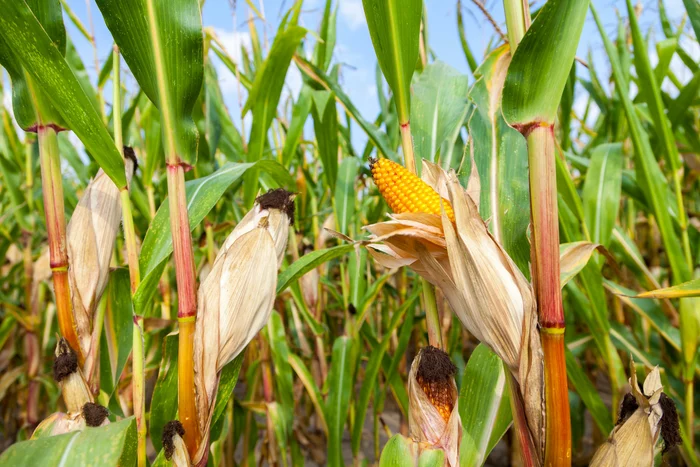
Corn starch
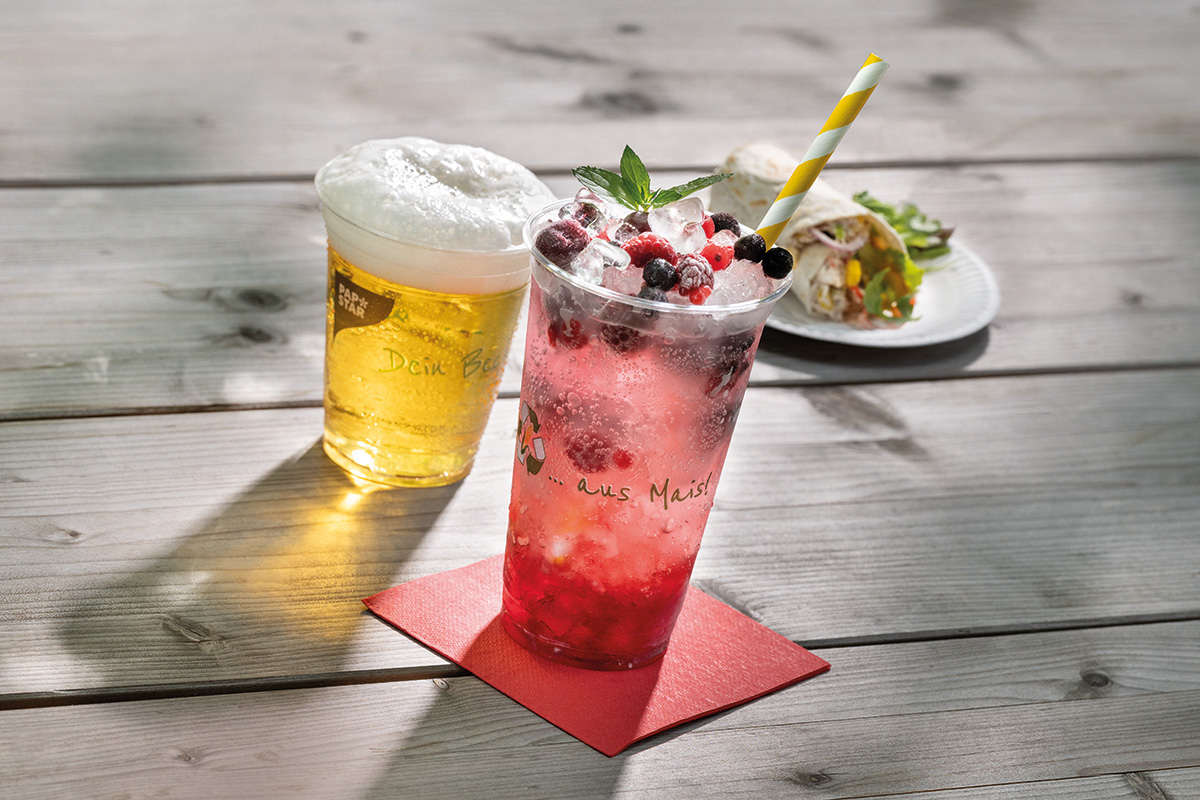
Visually, haptically and functionally, bioplastic products are virtually indistinguishable from normal plastic items. Cold drink cups or packaging materials, as well as viewing windows made from PLA (polylactides = polylactic acids, based on corn starch), are biocompatible and biodegradable in the long term under the right environmental conditions. Intensive research activities are leading to the optimisation of process technologies.
Agricultural Residues
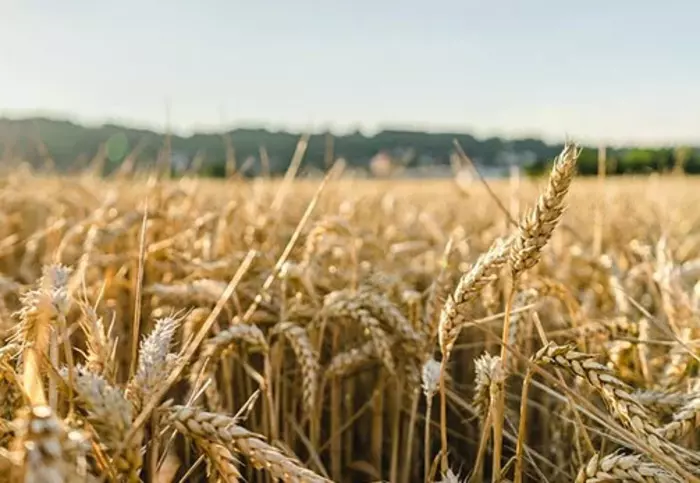
The approach already used for products made from sugar cane or palm leaves, namely to make good use of plant residues, also applies to agricultural residues. Plant residues from agricultural production are dried in the sun, ground and then processed into a pulp as self-binding fibres, which is injected into moulds and dried – the starting point for stable disposable tableware.

Even after the match
a league of its own
The Kölner Haie and powervolleys Düren are not only doing well on the pitch – off the field, they are also taking responsibility and using recyclable catering products made from renewable raw materials.
Michael Andrei and Moritz Müller
Captains of the powervolleys Düren and the Kölner Haie
Promotion of efficient alternative products
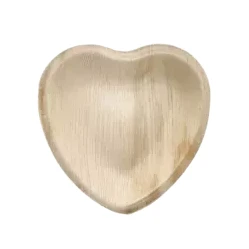
PAPSTAR thinks sustainably – so sustainably that it is even willing to forego offering non-sustainable products or materials. However, this does not mean limiting the choices available to customers, but rather providing efficient alternatives. The company sees significant potential in all three determinants of product range design (innovation, alternatives and interaction) to further accelerate the relevance of sustainable products and their use.
STARPAK as a sub-brand
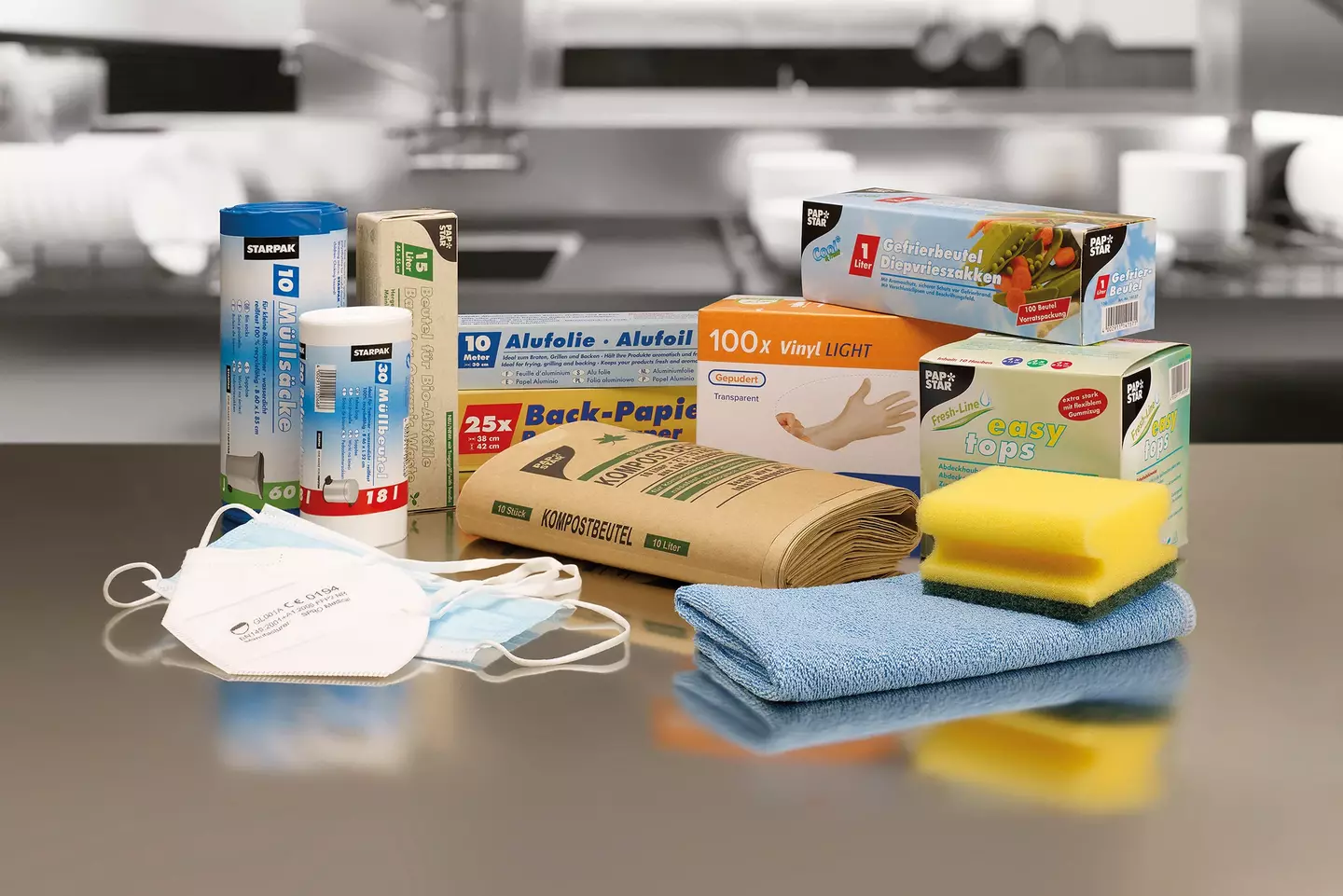
The STARPAK sub-brand offers a wide range of practical consumables that are indispensable for catering and the catering industry in general. The range includes inexpensive disposable tableware and service packaging made from non-renewable, mostly mineral oil-based raw materials such as plastic, plastic composites and, last but not least, aluminium.
All products are recyclable and can be returned to a recycling system via the dual systems.