The PAPSTAR fleet team puts the objectives of efficient resource use, reduced consumption and lower emissions into practice every day. The use of state-of-the-art technology and eco-driving training sessions for drivers have proven their worth.
Transport & Fleet
State of the art technology
As a logistics service provider with our own fleet, fuel consumption plays a significant role – from both an economic and an environmental perspective.
Euro 6 emissions standard
The conversion of the entire lorry fleet to vehicles meeting the Euro 6 emissions standard was just one measure taken as part of professional fleet management.
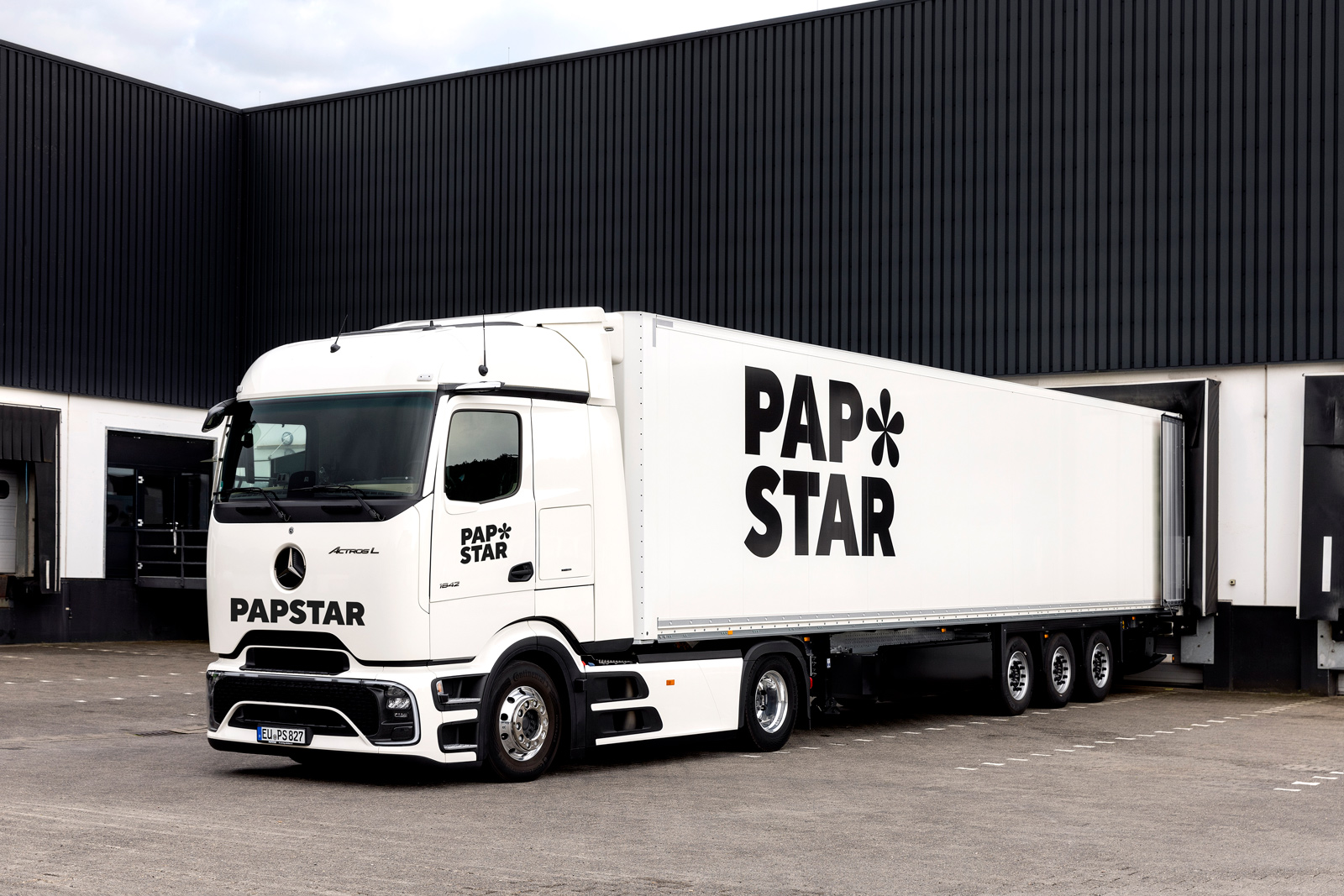
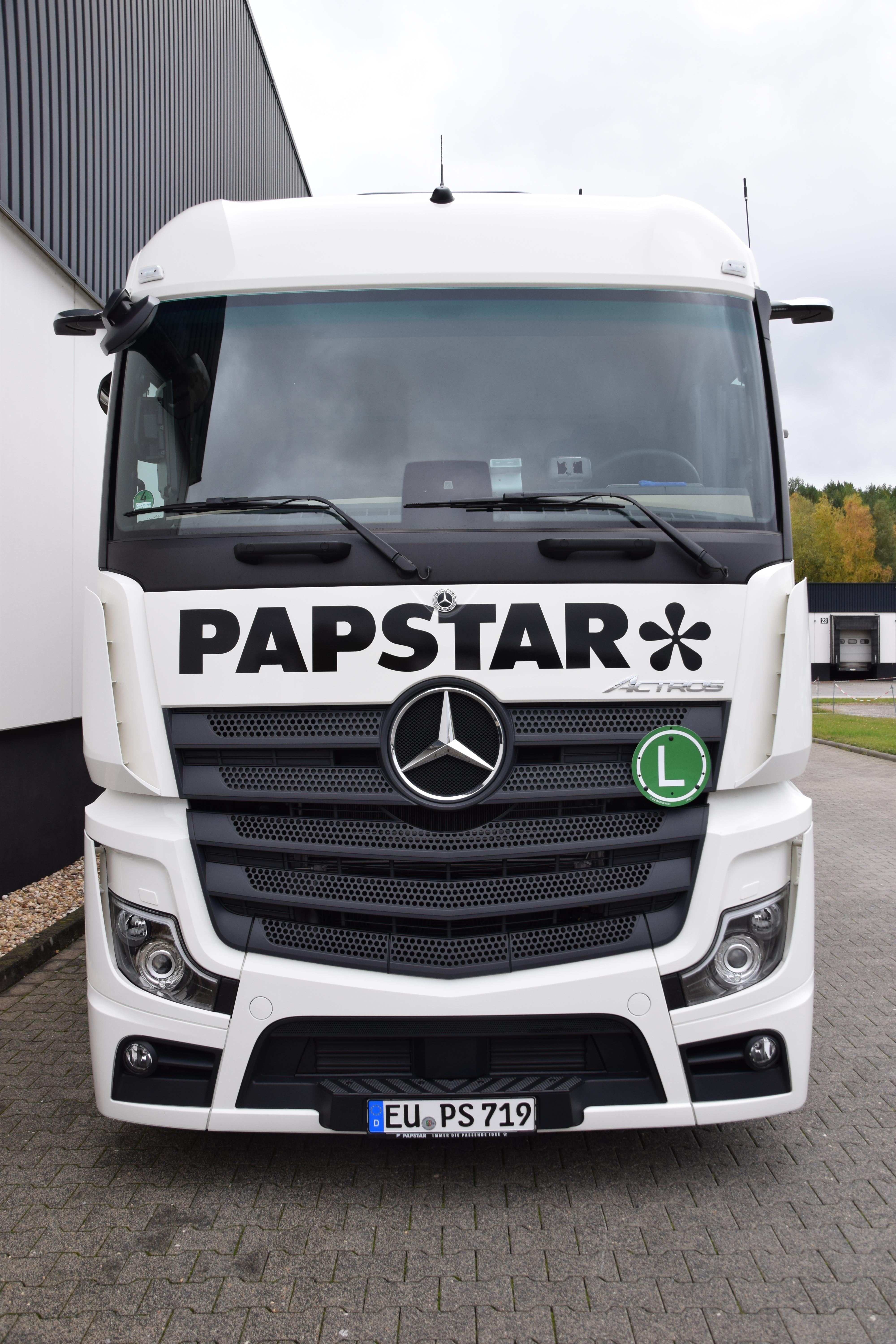
The new tractor units (Mercedes-Benz Actros L with ProCabin and fuel-saving aerodynamics) feature many innovations such as a multimedia cockpit with two colour displays showing all driving and vehicle information, MirrorCam instead of wing mirrors, semi-automated driving, Active Drive Assist, and advanced safety systems such as the fifth-generation Active Brake Assist or the further-improved turning, blind-spot and distance-keeping assistants.
Fuel savings
Through the integrated use of the ‘Daimler FleetBoard’ telematics system, fuel consumption and driver behaviour are continuously analysed so that improvement measures can be developed collaboratively.
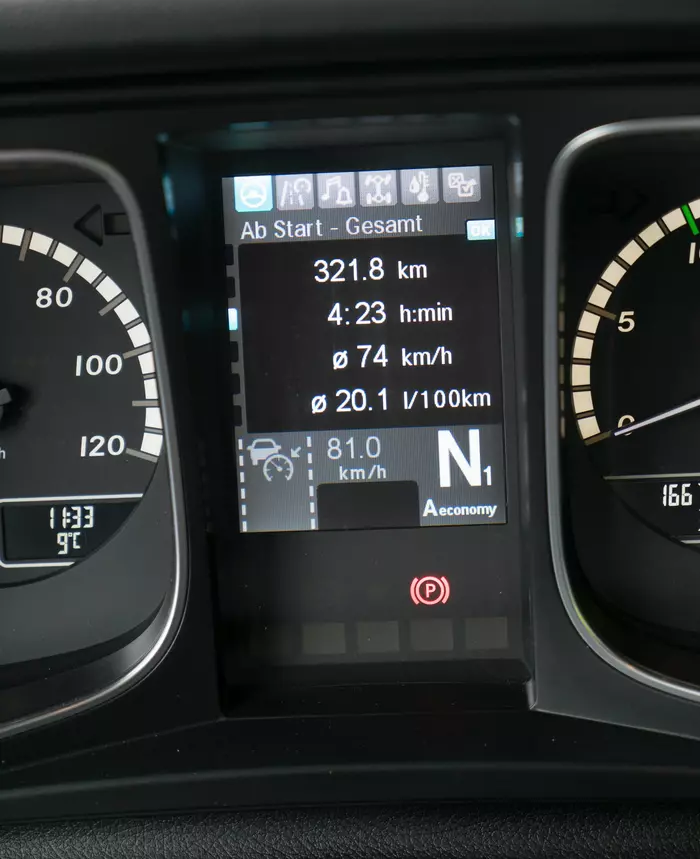
Training professional drivers by experienced Eco(nomic) driving instructors – including in health and safety – has proven highly effective in maintaining or improving performance levels. In addition to technology, aerodynamic conditions and driver behaviour, weather and route conditions, as well as transport load, influence fuel consumption, which has recently been reduced to 21.48 litres per 100 kilometres.
Route optimisation
To ensure optimal use of trailer space, PAPSTAR employs a double-deck system with 33 pallets (maximum height: 1.20 metres) per level. To minimise empty runs as far as possible, the fleet management team always plans all routes using a round-trip system, ensuring that the lorries are fully utilised on both the outward and return journeys.
A utilisation target of at least 70 per cent has emerged as a reliable benchmark in recent years.
PAPSTAR´s highly recognisable fleet
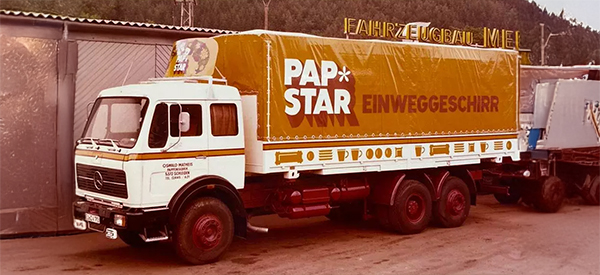
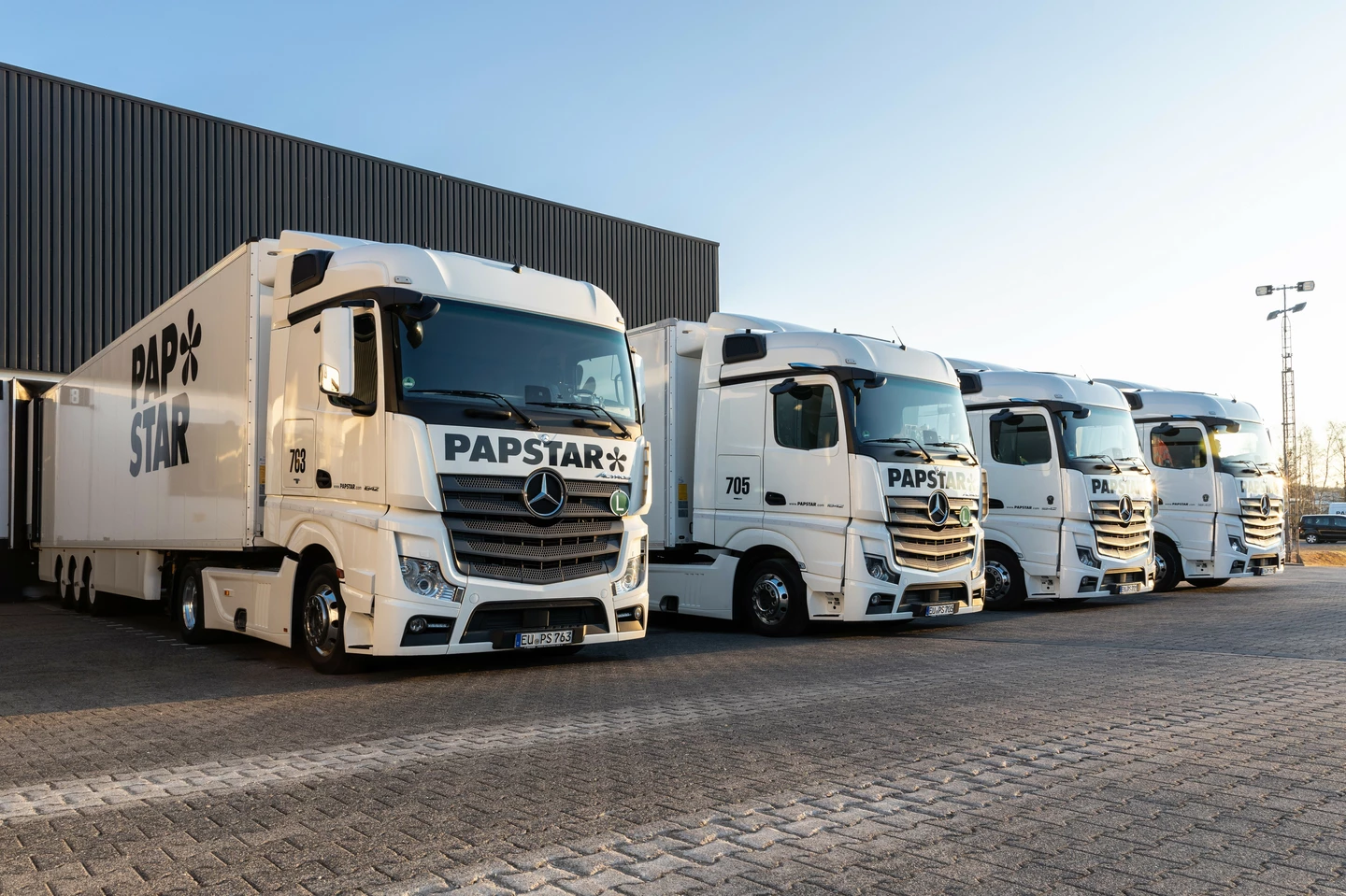
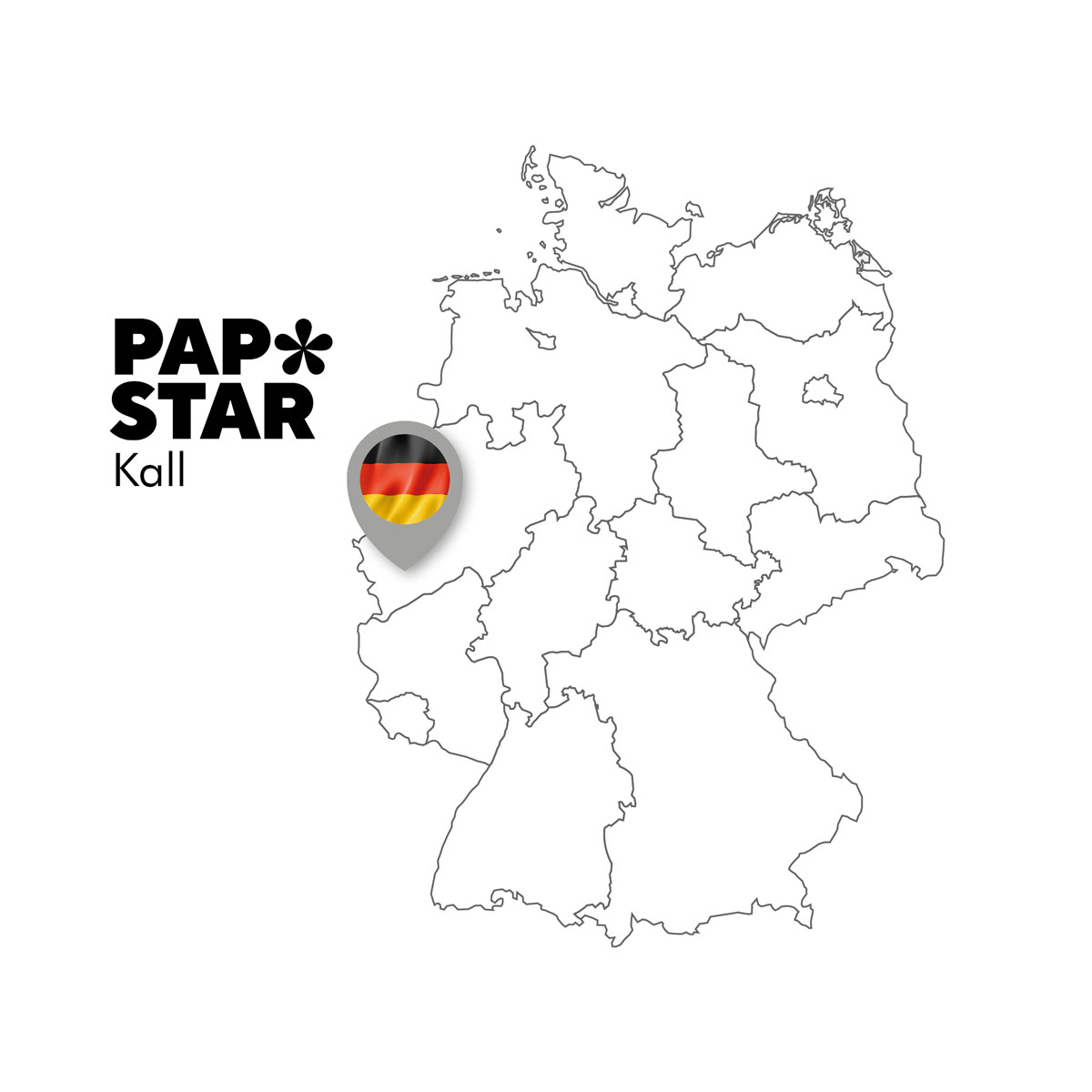
PAPSTAR’s truck fleet consists of Mercedes-Benz tractor units (with Schmitz Cargobull semi-trailers). These high-tech trucks are regarded as a precursor to autonomous driving and help to minimise fuel consumption. The objective is therefore to reduce fuel consumption per articulated lorry to below 21 litres per 100 kilometres by 2028. In total, the company, which operates across Europe and has its administrative and logistics headquarters in D-53925 Kall, has over 15 complete articulated lorries, which are driven, managed and maintained by experienced professional drivers (including one woman).
Biofuel and Key figures
In addition to reducing fuel consumption, PAPSTAR is seeking to reduce the carbon dioxide emissions of its vehicle fleet through fuel substitution. To this end, the use of HVO diesel (hydrotreated vegetable oil) is being investigated. HVO diesel is an alternative, renewable fuel produced not from crude oil but from vegetable oils (rapeseed, maize, beet), wood residues, manure or food waste.
- 2 female lorry driver
- 19 male lorry driver
- 7.792 delivery points in 2025
- 7,7 thousand tonnes of payload in 2025
- 15 Mercedes-Benz Actros L tractor units
- 21.52 litres of fuel consumption per 100 kilometres
- 47.0 cubic metres of load volume in 2025
- 1.51 million kilometres driven in 2025

CONTACT PERSON
Oliver Floßbach, Freight forwarding and transport planning