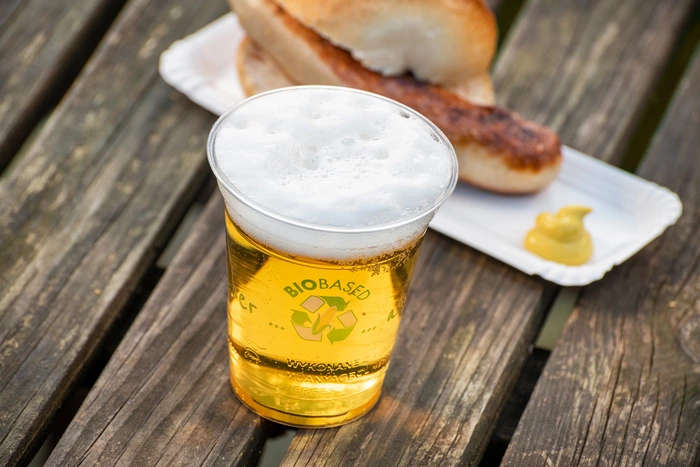
The recycling cycle for the uncoated ‘paper cup’ is watertight in the truest sense of the word – it has been successfully tested by endurance athletes, most recently at the ‘Düsseldorf Marathon’. This is because the rim of the cup can be easily shaped into a sort of ‘drinking spout’.
Paper cup cycle
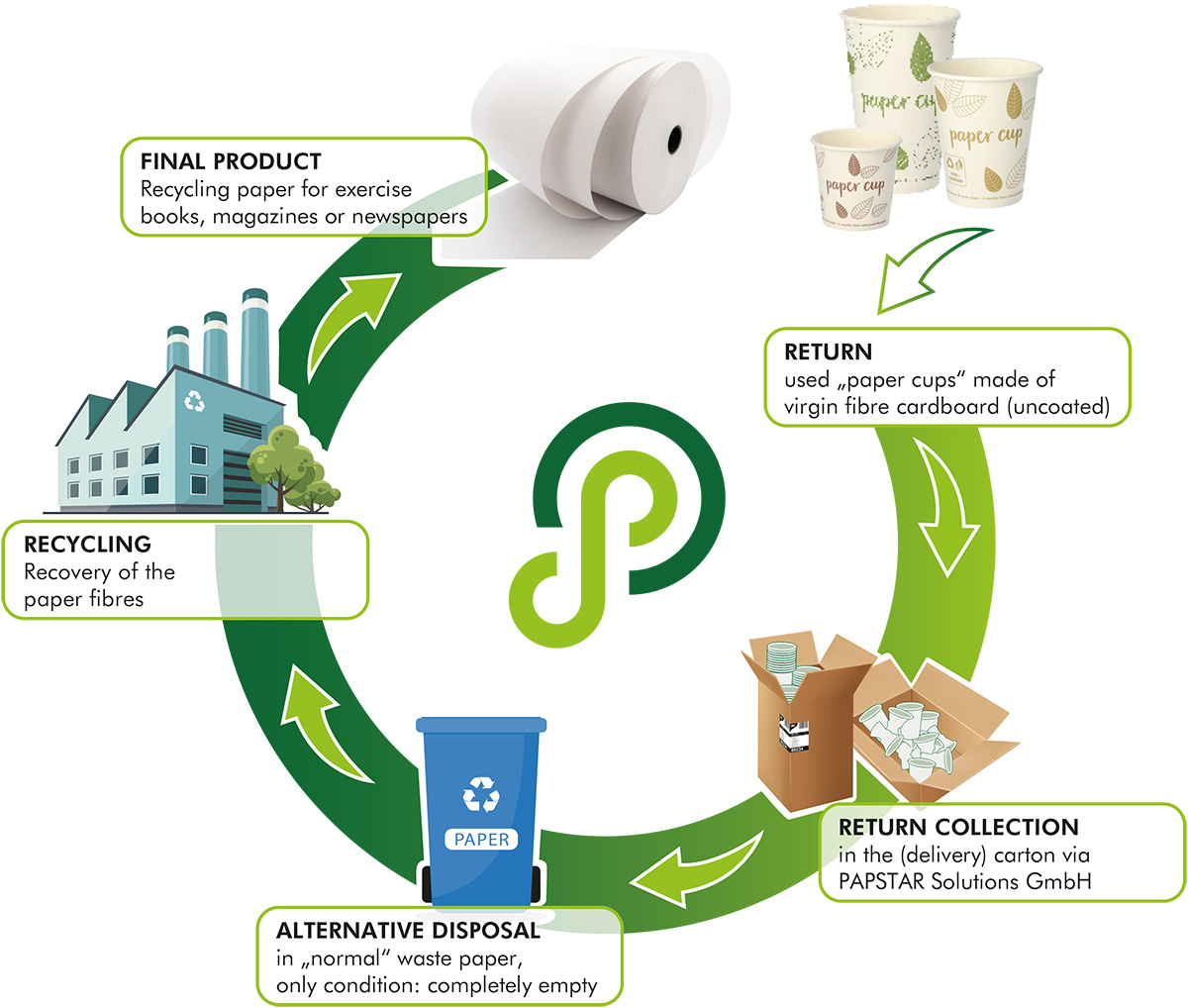
Recycling Cycle
Conventional recycling refers to the final process of reprocessing discarded recyclable materials into a new product.
MATERIAL: The ‘paper cup’, made from virgin fiberboard, requires no coating and is therefore ideal for paper recycling.
RETURN: The only condition is that the used cups are ‘completely empty’, i.e. have been used to their full capacity.
COLLECTION: Used cups are collected in the same condition as they were delivered, namely in cardboard boxes (stacked or crumpled) – via an environmentally friendly circular system (thus avoiding unnecessary CO₂ emissions). Another option is to contact your local waste management service provider directly.
ALTERNATIVE DISPOSAL: Emptied completely and disposed of with general waste paper (bin or container).
RECYCLING: Logistically efficient transport to the nearest paper mill or recycling centre; paper fibres can be recycled up to 25 times.
END PRODUCT: Recycled paper is primarily used to produce magazines and newspapers, exercise books, printer paper or packaging materials such as cardboard.


I´ ve got all my cups in the cupboard
Everyday heroes like smart alternatives. The ‘paper cups’ from the PAPSTAR range combine style and durability, and because they are uncoated, they can be emptied completely and disposed of with other paper waste.
Natascha Süverkrüp
Coffee Lover

CONTACT PERSON
Christoph Stahlhacke, PAPSTAR Solutions GmbH